Blog | UK Planning Knowledge Base — PlanWiser · MRTPI
PlanWiser · MRTPI · 2026

The UK Planning Knowledge Base

Straight answers from a practising chartered town planner — not a content agency, not a chatbot, not a law firm. Guides and FAQs organised by topic, covering the questions that decide most applications in England.

🎓 MRTPI qualified 📋 500+ applications ⚖️ NPPF December 2024
TW
Tom Weighton

Chartered town planner with 9+ years at local planning authorities across England. I've sat on both sides of the planning desk — as an officer and as a consultant — which is exactly why I can spot where a scheme stands or falls before it lands on an officer's desk.

MRTPI · MISEP — Royal Town Planning Institute
PILLAR 01

Planning permission & the decision process

How applications are decided, why they're refused, and how to engage the system — from the Local Plan and material considerations through to enforcement.

Frequently asked — applications & the planning system
Most applications are refused because the proposal conflicts with the council's Local Plan. That conflict is almost always avoidable.

Under s.38(6) PCPA 2004 applications must be determined in accordance with the development plan unless material considerations indicate otherwise. Common avoidable causes: not reading Local Plan policies before commissioning drawings; missing supporting documents; unaddressed environmental constraints — all checkable for free before submission.

Refusals are predictable, not random. Every application is assessed against five categories: policy compliance, design quality, amenity impact, highways, and environmental constraints. Miss any one and the officer has a well-founded reason to refuse.

Three failures account for the majority of avoidable refusals — all preventable before a single form is submitted.

1. No pre-submission neighbour engagement. Talk to neighbours, document it, address what you can, and include the engagement in your planning statement.

2. Design that doesn't fit its context. Scale, massing and materials must respect the surrounding area. The design and access statement must justify the design concept, not merely describe the proposal.

3. Unaddressed environmental constraints. Protected trees, flood zones, ecology and contamination are all checkable for free. They are not surprises — they are failures of preparation.

The Local Plan is the legally binding document controlling what can be built in your area. If your proposal conflicts with it, it will be refused.

Under s.38(6) PCPA 2004 all applications must be decided in accordance with it. It sets out where development goes, density requirements, design standards, affordable housing percentages and environmental designations. Read it before commissioning drawings.

If a council's Local Plan is more than five years old without active review and cannot demonstrate a five-year housing land supply, the plan may be out of date — triggering the presumption in favour of sustainable development. NPPF Para.11

A material planning consideration is any factor an officer or committee can lawfully take into account. Decisions made on non-material grounds are legally vulnerable.

Material: policy compliance, design quality, amenity impact (overlooking, overshadowing, loss of light, noise), highways, flood risk, ecology, heritage, public benefit.

Not material: effect on property values; personal disputes; competition concerns; moral objections; general opposition to change. A committee that refuses on non-material grounds exposes the council to a costs award at appeal.

Yes — in almost every case. A householder pre-app costs £100–£500 and takes 4–6 weeks. A refused application that goes to appeal costs £5,000–£15,000 and takes 12–30 months.

The officer's response identifies whether the principle is acceptable, which policies apply, what documents are required, and what design changes would strengthen the application. A response on file is also a material consideration. Book it before the architect produces detailed drawings.

Building without permission creates a breach permanently registered on the public planning portal — appearing in conveyancing searches, preventing sale and remortgage, and potentially resulting in criminal prosecution.

The council can serve a Planning Enforcement Notice requiring demolition within a compliance period. Non-compliance is a criminal offence with an unlimited fine. s.179 TCPA 1990

Expert note: The four-year rule is not a planning strategy. It is a fallback that requires documentary evidence of continuous use most homeowners do not have.

PILLAR 02

Permitted development rights

What you can build without a full application — and the situations where those automatic rights are restricted or removed.

Policy explained

What is permitted development and what are its limits?

Automatic PD rights versus prior approval, and the five situations where permitted development does not apply.

Read the guide →
Policy explained

What is an Article 4 Direction and how does it affect me?

How councils remove PD rights, where to check if one applies, and what it means for extensions and alterations.

Read the guide →
In progress
Coming soon

Change of use & the Use Classes Order

Use classes, Class MA and the prior approval routes — when a change of use needs full permission and when it doesn't.

Planned cluster article
In progress
Coming soon

Prior approval: how it actually works

What the council can and can't assess under prior approval, the timescales, and what happens if they don't respond.

Planned cluster article
Frequently asked — permitted development
It depends on permitted development rights under the GPDO 2015 — but those rights can be removed, and assuming they apply without checking is a common and costly mistake.
  • Detached houses: up to 8m rear extension under prior approval; up to 4m without. GPDO 2015
  • Semi / terraced: up to 6m under prior approval; up to 3m without.

PD rights do NOT apply if: the property is listed; an Article 4 Direction applies (common in conservation areas); conditions on the original permission removed them; or previous extensions used the allowance. A Certificate of Lawful Development provides formal written confirmation — strongly recommended even where PD rights clearly apply.

PILLAR 03

Green Belt & land designations

What the Green Belt actually is, the new grey belt under the December 2024 NPPF, and the designations that genuinely protect landscape and ecology.

In progress
Coming soon · Pillar guide

Can you build on the Green Belt? Grey belt & the 2024 NPPF

Very special circumstances, the new grey belt category, and what the December 2024 NPPF changed for Green Belt development.

Planned pillar article
In progress
Coming soon

National Landscapes (AONBs): what the designation means

How National Landscapes differ from Green Belt, and the higher bar they set for development and design.

Planned cluster article
In progress
Coming soon

SSSIs and protected sites near your plot

What a Site of Special Scientific Interest restricts, how to check for one, and the surveys you may need.

Planned cluster article
Frequently asked — Green Belt
No. The Green Belt is a spatial planning policy to prevent urban sprawl — not a nature or landscape designation. High ecological or landscape quality is not required for Green Belt status.

England has 1.6 million hectares of Green Belt. A significant proportion is scrubland, degraded agricultural land, golf courses and car parks — receiving almost the same planning protection as a National Park despite a fraction of the ecological value. The designations that actually protect landscape and ecology are National Parks, National Landscapes (formerly AONBs) and SSSIs — separate designations with separate legislative bases.

The December 2024 NPPF introduced 'grey belt' — lower-quality Green Belt land to be released before higher-quality land. NPPF Para.152

PILLAR 04

Heritage & conservation

Listed buildings, conservation areas and curtilage — the extra layer of control that applies to historic and protected properties.

In progress
Coming soon · Pillar guide

Listed building consent: what you can and can't do

When listed building consent is required, how it sits alongside planning permission, and the penalties for unauthorised works.

Planned pillar article
In progress
Coming soon

Living in a conservation area: what changes

The PD rights you lose, when Article 4 applies, and the rules on demolition, trees and materials.

Planned cluster article
In progress
Coming soon

What counts as curtilage — and why it matters

How curtilage is decided, and why it determines whether an outbuilding or boundary falls under listing or PD control.

Planned cluster article
PILLAR 05

Project-type guides

Practical, project-by-project guides. Each one links up into the policy pillars above — because most real projects touch several at once.

Homeowner guide

Do I need planning permission for a rear extension?

PD limits, prior approval, Article 4 Directions and when full permission is required — with rules for detached, semi and terraced houses.

Read the guide →
In progress
Coming soon

Outbuildings & garden rooms

Height and area limits, the rules on using a garden room as an office or annexe, and when it stops being permitted development.

Planned cluster article
In progress
Coming soon

Loft conversions & dormers

Volume allowances, when a dormer needs full permission, and the rules for terraced houses and Article 4 areas.

Planned cluster article
In progress
Coming soon

Barn conversions & Class Q

The Class Q prior approval route, its limits, and how Green Belt and heritage constraints affect agricultural conversions.

Planned cluster article

Not sure where your application stands?

Take the free planning quiz — 15 questions, a personalised risk score, no sign-up required.

Note: General guidance for England under NPPF December 2024, updated 2026. Does not constitute professional planning advice. Always consult a chartered town planner (MRTPI) before submitting an application or commencing works. PlanWiser · Tom Weighton · MRTPI · MISEP · planwiser.uk

Heritage & conservation Tom Weighton Heritage & conservation Tom Weighton

Listed Building Consent: What you can and cannot do

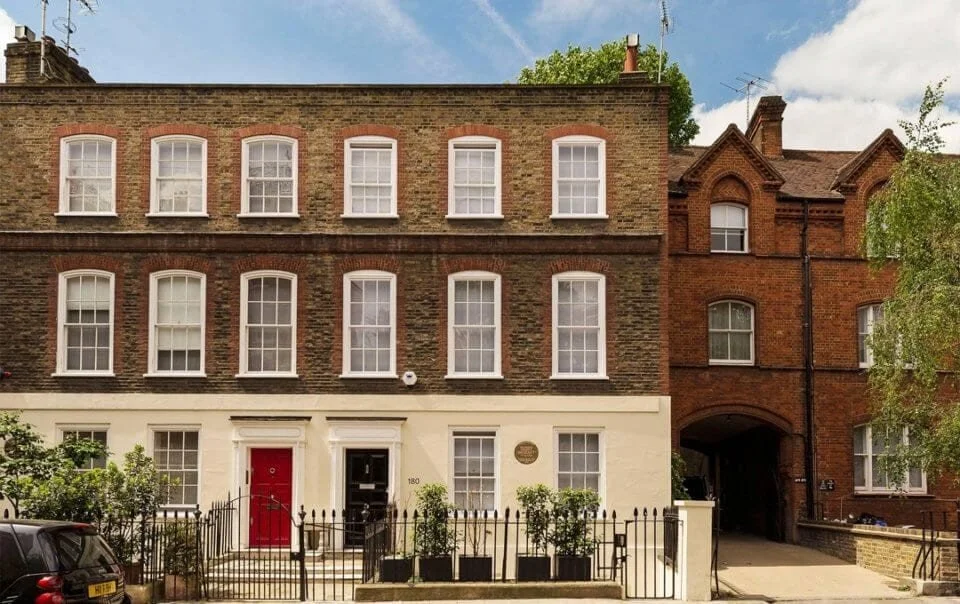
You can carry out routine, like-for-like maintenance to a listed building without consent — minor repairs in matching materials, redecoration, and swapping purely modern fittings. You need listed building consent for anything that affects the building's special character: altering or removing original fabric, replacing windows or doors, extending, demolishing, or changing the exterior. The listing covers the whole building, inside and out, plus attached structures and most pre-1948 buildings in the grounds. Doing work that needs consent without it is a criminal offence — so when in doubt, check with your local conservation officer first.

Read More